
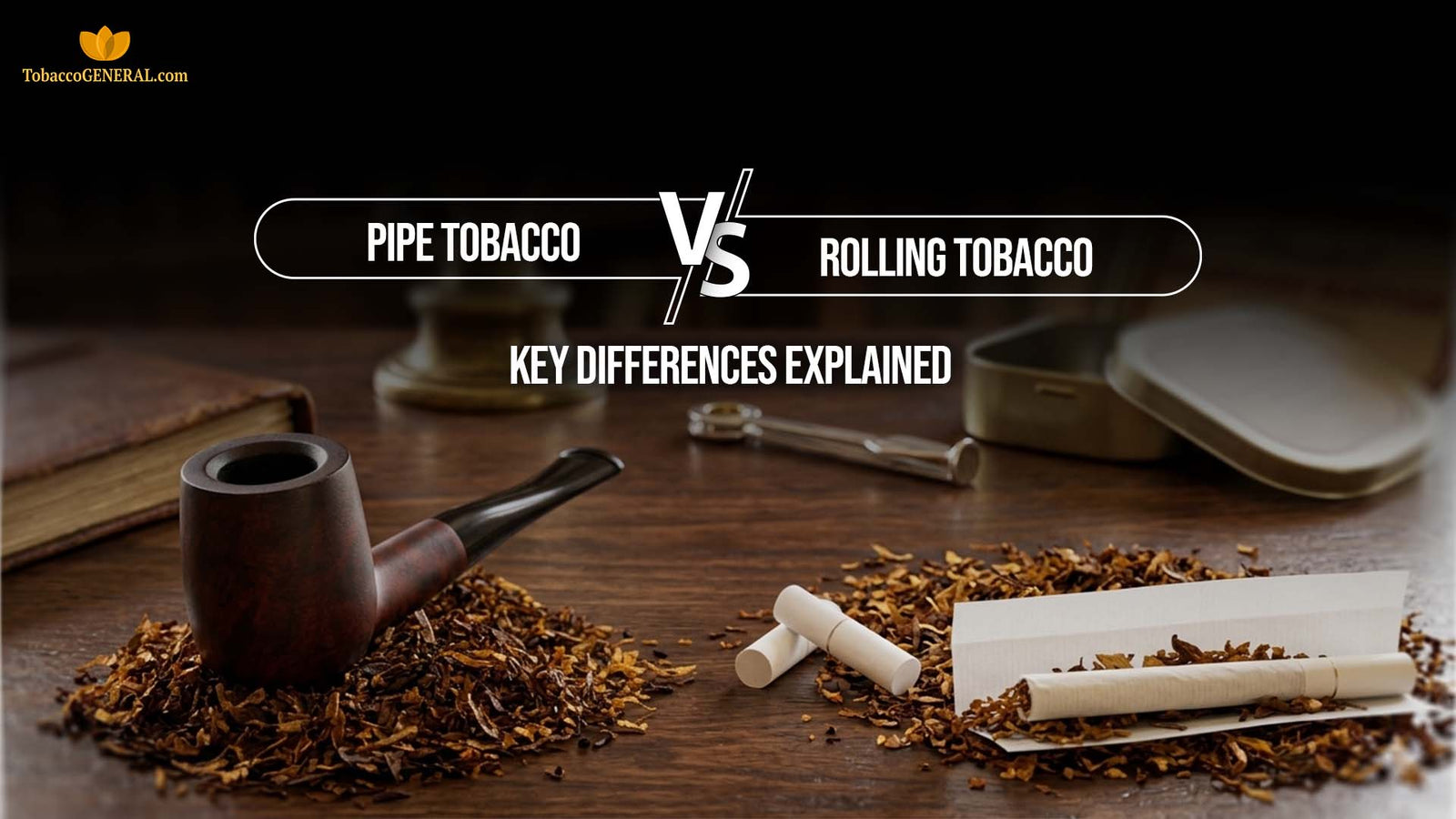
Tobacco enthusiasts often come across two commonly discussed terms: pipe tobacco and rolling tobacco. While both originate from tobacco leaves, they are designed for very different smoking experiences. Understanding the difference between the two can help smokers choose the right tobacco for their preferred style of smoking.
Many people assume that pipe tobacco and rolling tobacco are interchangeable. In reality, they differ in moisture level, cut style, flavor profile, burn rate, and intended use. These distinctions affect everything from how the tobacco is prepared to how it burns during smoking.
If you are exploring tobacco options or simply curious about how these two types compare, this guide explains the key differences between pipe tobacco and rolling tobacco clearly and practically.
What Is Pipe Tobacco?
Pipe tobacco is specifically crafted for smoking in a tobacco pipe. It is typically blended with aromatic or natural flavor profiles and cut to burn slowly in a pipe bowl.

Pipe tobacco often has a higher moisture content compared to rolling tobacco. This moisture helps the tobacco burn gradually, which creates a longer and more relaxed smoking session. Many pipe tobacco blends also contain carefully balanced flavorings that produce a pleasant aroma, often referred to as the “room note.”
The cut of pipe tobacco can vary widely. Common cuts include ribbon, cube, and flake tobacco. Each cut influences how the tobacco packs inside the pipe and how evenly it burns.
Pipe smoking is often associated with a slower, more ritualistic experience. Smokers take time to pack the bowl, light the tobacco carefully, and enjoy the flavor over an extended period.
For those who enjoy this style of smoking, exploring a range of pipe tobacco blends can make the experience even more enjoyable. If you are interested in discovering different blends, you can explore the pipe tobacco collection here.
What Is Rolling Tobacco?
Rolling tobacco, sometimes called roll-your-own tobacco, is designed for hand-rolled cigarettes. It is typically drier and cut much finer than pipe tobacco so that it burns properly inside rolling papers.

Because cigarettes burn more quickly than pipe tobacco, rolling tobacco is processed in a way that ensures an even burn when rolled into a cigarette. The finer cut allows the tobacco to distribute evenly across the paper, creating a smoother smoking experience.
Rolling tobacco also tends to have less moisture and fewer aromatic additives compared to pipe tobacco. Many smokers prefer this because it delivers a more direct tobacco flavor.
Another key aspect of rolling tobacco is convenience. Smokers who roll their own cigarettes often enjoy the ability to control the amount of tobacco used, the type of rolling paper, and the overall smoking experience.
Pipe Tobacco vs Rolling Tobacco: Key Differences
Although both types of tobacco come from the same plant, the way they are processed and used creates noticeable differences.
Below is a simplified comparison to help understand the distinction more clearly.
 These differences exist because each type of tobacco is tailored to the way it will be smoked.
Differences in Tobacco Cut
The cut of the tobacco leaf plays a major role in how it behaves during smoking.
Pipe tobacco typically uses larger and thicker cuts. These cuts help control airflow in the pipe bowl and allow the tobacco to burn slowly. The result is a cooler smoke and longer smoking sessions.
Rolling tobacco, on the other hand, uses a very fine cut. This makes it easier to distribute evenly inside rolling papers and ensures that the cigarette burns consistently from start to finish.
Using pipe tobacco in rolling papers can sometimes cause uneven burning because the cut is not designed for that purpose.
Moisture Content and Burning Behavior
Another major difference between pipe tobacco and rolling tobacco is moisture level.
Pipe tobacco is generally moister and slightly sticky when first opened. This moisture helps maintain flavor and prevents the tobacco from burning too quickly inside a pipe.
Rolling tobacco is intentionally drier. If rolling tobacco had the same moisture level as pipe tobacco, cigarettes would be difficult to light and maintain.
Because of this difference, pipe tobacco usually burns slower and produces more aromatic smoke, while rolling tobacco burns faster and produces a stronger tobacco taste.
Flavor and Aroma Differences
Flavor is one of the most noticeable distinctions between the two tobacco types.
Pipe tobacco blends are often carefully flavored or aromatic. Popular blends may include notes such as vanilla, cherry, caramel, or natural tobacco sweetness. These blends create a pleasant aroma in the air while smoking.
Rolling tobacco typically focuses on the pure tobacco flavor. While some brands offer subtle variations, the goal is usually to preserve the natural taste of the tobacco leaf.
Because of this difference, pipe smoking is often appreciated for its aroma and complexity, while rolling tobacco appeals to smokers who prefer a straightforward tobacco taste.
Can Pipe Tobacco Be Used for Rolling?
This is a common question among tobacco users.
Technically, pipe tobacco can be used for rolling cigarettes, but it may not perform the same way as rolling tobacco. The coarser cut and higher moisture content can cause uneven burning or make rolling more difficult.
Some smokers choose to dry pipe tobacco slightly before rolling it, but the experience will still differ from tobacco specifically designed for roll-your-own cigarettes.
In general, using tobacco for its intended purpose produces the best results.
Choosing the Right Tobacco for Your Preference
Selecting between pipe tobacco and rolling tobacco ultimately depends on the smoking experience you prefer.
If you enjoy a slower and more relaxed session with complex aromas and flavors, pipe tobacco may be the better choice. The process of packing a pipe and enjoying the smoke gradually can feel more ritualistic and immersive.
If you prefer convenience and quicker smoking sessions, rolling tobacco may be more suitable. Hand-rolled cigarettes provide flexibility and allow smokers to customize their smoking style.
For those who enjoy pipe smoking, exploring different blends can significantly enhance the experience. If you are interested in finding quality options, you can explore
Tobacco General’s pipe tobacco collection here.
Conclusion
Pipe tobacco and rolling tobacco may come from the same plant, but they are designed for very different purposes. Differences in cut, moisture level, flavor profile, and burn rate all influence how each tobacco type performs during smoking.
Understanding these distinctions helps smokers choose the right tobacco for their preferences and enjoy a more satisfying smoking experience.
If you are interested in exploring high quality blends, you can shop pipe tobacco and smoking accessories at Tobacco General. Whether you are an experienced pipe smoker or someone curious about trying new tobacco blends, having access to a reliable selection can make all the difference.
Frequently Asked Questions
1. What is the main difference between pipe tobacco and rolling tobacco?
The main difference lies in their cut, moisture level, and intended use. Pipe tobacco is coarser and more moist, designed for smoking in a pipe, while rolling tobacco is finely cut and drier so it burns properly in hand rolled cigarettes.
2. Can pipe tobacco be used for rolling cigarettes?
Pipe tobacco can technically be used for rolling cigarettes, but it may not burn evenly because it is cut differently and contains more moisture. Rolling tobacco is specifically processed for better performance in hand rolled cigarettes.
3. Where can I buy quality pipe tobacco online?
Quality pipe tobacco can be purchased from specialized online tobacco retailers. Stores like Tobacco General offer a wide selection of pipe tobacco blends along with smoking accessories, making it easier to explore different options and find the right blend for your preferences.
